User goal
Complete a specific task with confidence, without having to learn the portal’s internal structure.
Telecom · GOL · UX Research
Research and prioritization to understand why B2B customers abandoned frequent tasks in GOL and turned digital friction into support contact.
01 · The project
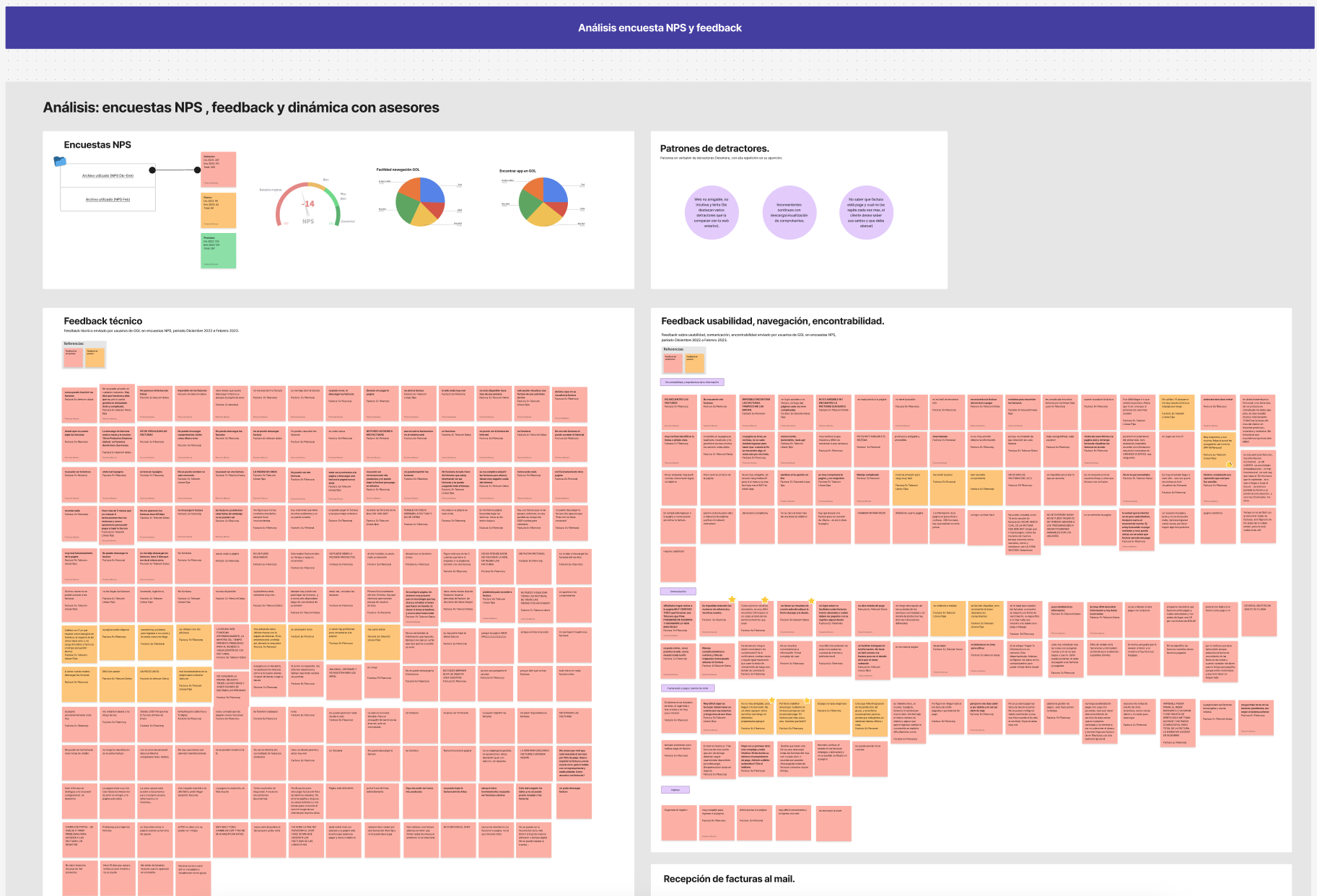
GOL is Telecom’s B2B portal for customers with multiple products and contracts. Although it brought together critical tasks—bills, lines, services and claims—an NPS of −14 and open feedback pointed to difficulties completing them without assistance.
What friction interrupted self-service, and what changes could increase clarity and confidence?
Complete a specific task with confidence, without having to learn the portal’s internal structure.
Identify opportunities to improve findability, clarity and continuity of self-service.
02 · My contribution
As UX Researcher, I designed and led a six-week study with UX, Business and Customer Service. I analyzed existing signals, facilitated a workshop with four support team members, interviewed nine customers and synthesized the evidence into prioritized opportunities.
NPS analysis, open feedback, moderated interviews and journey audit.
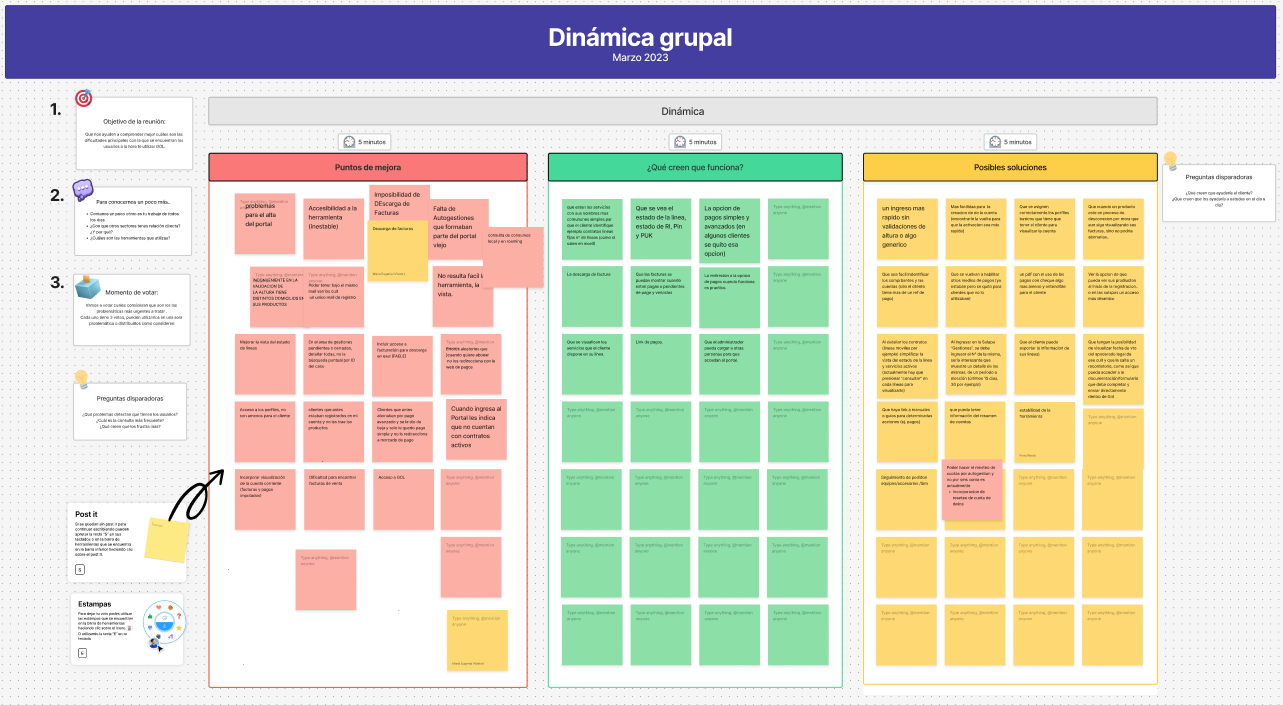
Support workshop, evidence triangulation and prioritization with the team.
03 · How we approached it
The research combined existing data, support team knowledge and qualitative observation. Triangulation helped distinguish isolated symptoms from consistent patterns.
We reviewed results, open comments and the current journey to build hypotheses about navigation, clarity and performance.
A Customer Service workshop mapped recurring obstacles, likely causes and opportunities observed by support.
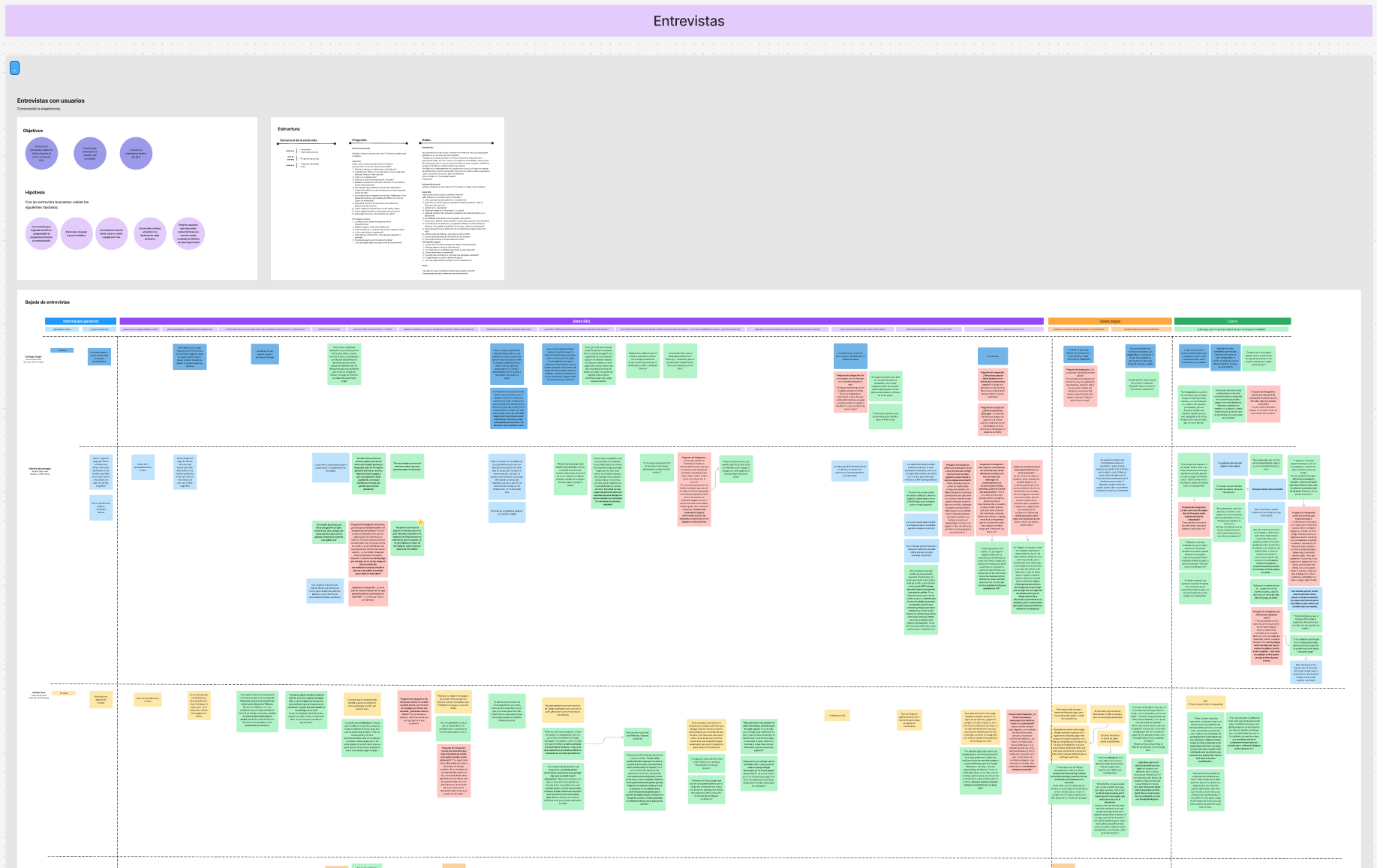
Nine customers with multiple products or contracts completed real tasks and explained their expectations, doubts and strategies.
We connected what people said, what the portal showed and what the business received as support queries.
04 · What we found
People had to interpret the portal’s logic before finding a task. The problem was not missing information, but how it was organized and named.
Bills, active contracts, lines and claims were recurring tasks, but they were not as visible as users expected.
When statuses or paths were unclear, people avoided experimenting. They preferred contacting support rather than risk “breaking” something.
When a task could not be completed quickly, the self-service journey stopped and Customer Service absorbed the query.
05 · Recommendations and next steps
The main outcome was a shared understanding of the problem: four patterns supported by three perspectives, prioritized opportunities and a defined next experiment. The scope was diagnostic, so no later improvements are attributed without measurement.
Organize categories around mental models and adjust labels to anticipate what users can do.
Provide visible access to bills, contracts, lines and claims from the home page and contextual entry points.
Improve hierarchy, statuses and microcopy to reduce uncertainty during a task.
Test the new architecture and navigation with real tasks before moving changes into production.
06 · What I learned
This project changed how I look at friction. I learned that the interface explained only part of the problem: by connecting customer voices, product signals and the support experience, we could understand why uncertainty became contact and guide concrete decisions.
Recommended next step: prototype the new architecture, measure task success and compare the need for support before and after.